Bryan Kohberger and the Idaho Four: The Knife Sheath That Broke the Case
Four students killed in one house in under 20 minutes, no witnesses who understood what they'd seen, and a single button snap with DNA on it. The full case file on the Idaho murders.
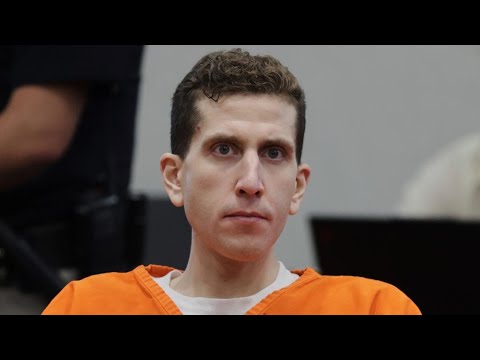
Some cases are solved by a witness. Some by a confession. The murders of four University of Idaho students were solved by a button snap — the metal clasp on a knife sheath, left behind on a bed next to two of the victims, carrying a single source of male DNA.
The man that DNA belonged to was a PhD student studying criminology — at the next university over, 15 minutes away — writing papers about how offenders make decisions at crime scenes.
Background: the house on King Road
Moscow, Idaho, is a college town of about 25,000 that had not recorded a murder in roughly seven years. The off-campus house at 1122 King Road was a hub of University of Idaho social life — a big three-story rental where five young women lived, steps from Greek row.
On the night of November 12, 2022, the house's residents were doing exactly what college students do on a Saturday: Madison "Maddie" Mogen, 21, and Kaylee Goncalves, 21 — best friends since childhood — hit a bar downtown and a food truck after. Xana Kernodle, 20, and her boyfriend Ethan Chapin, 20, spent the evening at a fraternity party. By around 2 a.m. on November 13, all four were back at the house. Two other roommates were home, asleep on the bottom floor and the second floor.
Sometime around 4:00 to 4:25 a.m., someone entered the house — prosecutors would later say through the second-floor sliding door at the back — climbed to the third floor, and killed Mogen and Goncalves in one bed. On the way out, on the second floor, he encountered Kernodle, who was still awake — a DoorDash order had arrived around 4:00 — and killed her, and then Chapin, asleep in her room.
Four people, three bedrooms, a fixed-blade knife, and — by the timeline later assembled from phones, cameras, and a surviving witness — less than twenty minutes.
The witness who didn't know
One of the surviving roommates would become the case's most haunting detail. In a statement summarized in the probable cause affidavit, she described being woken by noises — a voice or crying, a male voice saying something like "it's ok, I'm going to help you" — and then opening her door to see a figure in black clothing and a mask, with bushy eyebrows, walking toward the sliding door. Frozen in shock, she locked herself in her room.
No 911 call came until just before noon — a delay the internet spent months dissecting and prosecutors spent one sentence defusing: she was a terrified 19-year-old who could not process what she had seen, and nothing she could have done would have saved four people attacked in their sleep. When the call finally came, it reported an unconscious person. Responding officers found a scene that veteran investigators described as among the worst they'd worked.
The evidence: three threads and a snap
For six weeks, the case looked cold from the outside. No suspect, no weapon, no motive, a town in panic, students leaving mid-semester. Inside the investigation, three threads were being braided together.
1. The sheath
Next to Mogen and Goncalves, investigators found a Ka-Bar knife sheath — military-style, leather, for a large fixed-blade knife. The knife itself was gone (it has never been found). But the sheath's button snap held touch DNA from a single male source.
The profile matched no one in CODIS. So investigators turned to investigative genetic genealogy — the technique that broke the Golden State Killer case: upload the profile to genealogy databases, build family trees from partial matches, and narrow the branches until a candidate emerges. The tree pointed to a family in Pennsylvania, and to a son: Bryan Kohberger, 28, a first-year PhD student in criminal justice and criminology at Washington State University in Pullman — eight miles and one state line from the King Road house.
In late December, agents surveilling the Kohberger family home in Albrightsville, Pennsylvania, pulled the household trash. DNA on an item in that trash came back as the biological father of whoever left the DNA on the sheath. That was enough.
2. The car
A white Hyundai Elantra appears on camera after camera in the King Road neighborhood in the 4 a.m. hour — circling, passing the house repeatedly, then leaving at 4:20 a.m. at speed. Police put out a BOLO for the car before they had a name; when the genealogy pointed at Kohberger, the registration closed the loop — he drove a white Elantra. WSU campus police had it on file.
3. The phone
Kohberger's cell records, laid out in the affidavit, did two damning things. On the night of the murders, the phone went dark — off or in airplane mode — from roughly 2:47 a.m. to 4:48 a.m., precisely bracketing the killings, then pinged on a route consistent with a long way home. And in the months before November 13, the phone had connected to towers serving the King Road area at least a dozen times, almost all late at night or in the early morning hours.
He was arrested at his parents' home in Pennsylvania on December 30, 2022 — taken in an early-morning raid, reportedly awake, in gloves, sorting his own trash into ziplock bags.
The legal road: 2022–2025
What followed was two and a half years of pretrial warfare, conducted under one of the broadest gag orders in recent memory:
- May 2023 — an Idaho grand jury indicted Kohberger on four counts of first-degree murder and one count of burglary — charged, at that point, not convicted. At arraignment he stood silent, and the court entered not-guilty pleas for him.
- The alibi that wasn't — asked to produce an alibi, the defense ultimately offered that Kohberger was driving alone the night of the murders, "as he often did," looking at the moon and stars. No witness could place him anywhere else.
- The DNA fight — the defense attacked the genetic genealogy process itself, seeking to suppress the family-tree work that identified him. The courts allowed the evidence.
- The death penalty — prosecutors filed notice to seek it; the defense tried repeatedly to strike it, including on the grounds of Kohberger's autism spectrum diagnosis. The courts kept it on the table.
- Change of venue — with Latah County saturated by the case, the Idaho Supreme Court moved the trial to Ada County (Boise), under Judge Steven Hippler, with trial set for August 2025.
Then, with jury selection weeks away, the case ended.
The plea: everything, for nothing
On July 2, 2025, Bryan Kohberger stood in a Boise courtroom and answered a series of questions from Judge Hippler. Did he enter the house on King Road on November 13, 2022, intending to kill? Yes. Did he kill Madison Mogen? Yes. Kaylee Goncalves? Yes. Xana Kernodle? Yes. Ethan Chapin? Yes.
Flat, one-word admissions — the first and only time he has ever acknowledged the crimes. The deal: guilty to all five counts, death penalty off the table, all appeals waived — a fully negotiated bargain, the opposite of the non-negotiated "open" plea some defendants enter with no promises at all. No explanation required, and none offered.
The victims' families split publicly over it. The Goncalves family blasted the state for taking execution off the table without demanding a motive or the location of the murder weapon. Others — including the Mogen and Chapin families — expressed relief that there would be no trial, no crime-scene photos on courtroom screens, no decades of appeals.
The sentencing: "I respectfully decline"
On July 23, 2025, the families finally got their courtroom — for victim impact statements that ran for hours. Surviving roommate Dylan Mortensen, sobbing, described the panic attacks and the hypervigilance of living as the person who saw him. Kaylee's father, Steve Goncalves, turned the lectern to face Kohberger directly. Xana's stepfather told him to go to hell.
Offered the chance to speak — to explain, to apologize, to say anything — Kohberger delivered the only public sentence of the entire case:
"I respectfully decline."
Judge Hippler sentenced him to four consecutive terms of life without the possibility of parole, plus ten years for burglary, calling the crimes an act of "unfathomable" evil and noting that the court would not give the killer the spotlight of an explanation he clearly wanted history to chase. Kohberger was transferred to the Idaho Maximum Security Institution south of Boise.
With the gag order lifted and the case closed, Moscow police released thousands of pages of investigative records — documenting, among other things, hundreds of tips, false leads, and the internet's years-long habit of accusing innocent people. The records answered many procedural questions. They did not answer the only one anyone still asks.
The missing piece: why
No motive has ever been established. Investigators found no known connection between Kohberger and any of the four victims — no messages, no relationship, no documented encounter. The knife has never been recovered. The selection of that house, those victims, that night, remains unexplained by anything in the public record.
What the record does hold are fragments that refuse to assemble: a criminology student who once wrote a survey asking offenders how they chose their victims and what they felt at the scene; an application essay about wanting to work in crime scene analysis; a phone that visited the neighborhood a dozen times before the night it went dark.
A man who studied why people kill, who will now spend the rest of his life as the case study he never explained.
Why this case file matters
Strip away the enormity of it and the Idaho case is the clearest demonstration yet of how modern homicides get solved: no eyewitness identification, no confession, no murder weapon — a conviction built from a touch-DNA profile on a button snap, a family tree assembled from public genealogy databases, a car on a dozen cameras, and a phone that told on its owner by going silent.
Every layer of that evidence was contested, and every layer held. When the defendant finally spoke, it was to say one word — yes — five times, and nothing more.
The record convicted him. The record just can't explain him.
Case status as of this writing: convicted by guilty plea on all counts; serving four consecutive life sentences without parole, appeals waived. The murder weapon has not been recovered and no motive has been established. This article is based on the probable cause affidavit, court proceedings and plea colloquy, sentencing statements, records released by Moscow police after sentencing, and contemporaneous reporting. Photo: Kohberger at his change-of-plea hearing, Ada County, July 2025 (courtroom pool footage).
Reported to our editorial standards: records first, charges reported as charges, corrections welcomed.
Frequently asked questions
Who were the victims of the Idaho student murders?+
Four University of Idaho students were killed on November 13, 2022: Madison Mogen, 21; Kaylee Goncalves, 21; Xana Kernodle, 20; and Ethan Chapin, 20. Two other roommates in the house survived.
How was Bryan Kohberger caught?+
Investigators recovered a Ka-Bar knife sheath from the crime scene with male DNA on its button snap. Investigative genetic genealogy pointed to Kohberger, and DNA from trash recovered at his parents' Pennsylvania home showed a family match. Cell phone records and a white Hyundai Elantra captured on cameras tied him to the area. He was arrested December 30, 2022.
Did Bryan Kohberger go to trial?+
No. On July 2, 2025, weeks before his trial was set to begin, Kohberger pleaded guilty to all four murders and burglary in a deal that removed the death penalty and waived his right to appeal.
What sentence did Bryan Kohberger receive?+
On July 23, 2025, Judge Steven Hippler sentenced him to four consecutive terms of life in prison without the possibility of parole, plus ten years for burglary.
What was Bryan Kohberger's motive?+
No motive has ever been established. Kohberger admitted the killings in his plea but never explained them, declining to speak at sentencing. Investigators have said they found no known connection between Kohberger and any of the victims.
Stay On The Case
Get the next case file first
One email when a new case drops — footage, records, and the full breakdown.
Subscribe on YouTubeRelated case files
 Case FilesCASE CLOSED
Rex Heuermann: The Gilgo Beach Case Is Closed — the Beach Isn't Done Giving Up Questions
Seven guilty pleas, an eighth killing admitted in open court, three life sentences — and remains on Ocean Parkway still without answers. The full Gilgo Beach case file.
 Case FilesVERDICT: GUILTY
The Delphi Murders: 43 Seconds of Video That Took 7 Years to Match
Libby German filmed her own killer on the Monon High Bridge. The video, the 'down the hill' audio, the 2024 verdict, and the appeal now underway — the full Delphi case file.
 Trials & Verdicts
Non-Negotiated Guilty Pleas: Why a Defendant Pleads Guilty With No Deal
No plea bargain, no agreed sentence — just guilty, to everything. Why defendants enter open or 'blind' pleas, what happens at the hearing, and what it means for sentencing.