The Delphi Murders: 43 Seconds of Video That Took 7 Years to Match
Libby German filmed her own killer on the Monon High Bridge. The video, the 'down the hill' audio, the 2024 verdict, and the appeal now underway — the full Delphi case file.
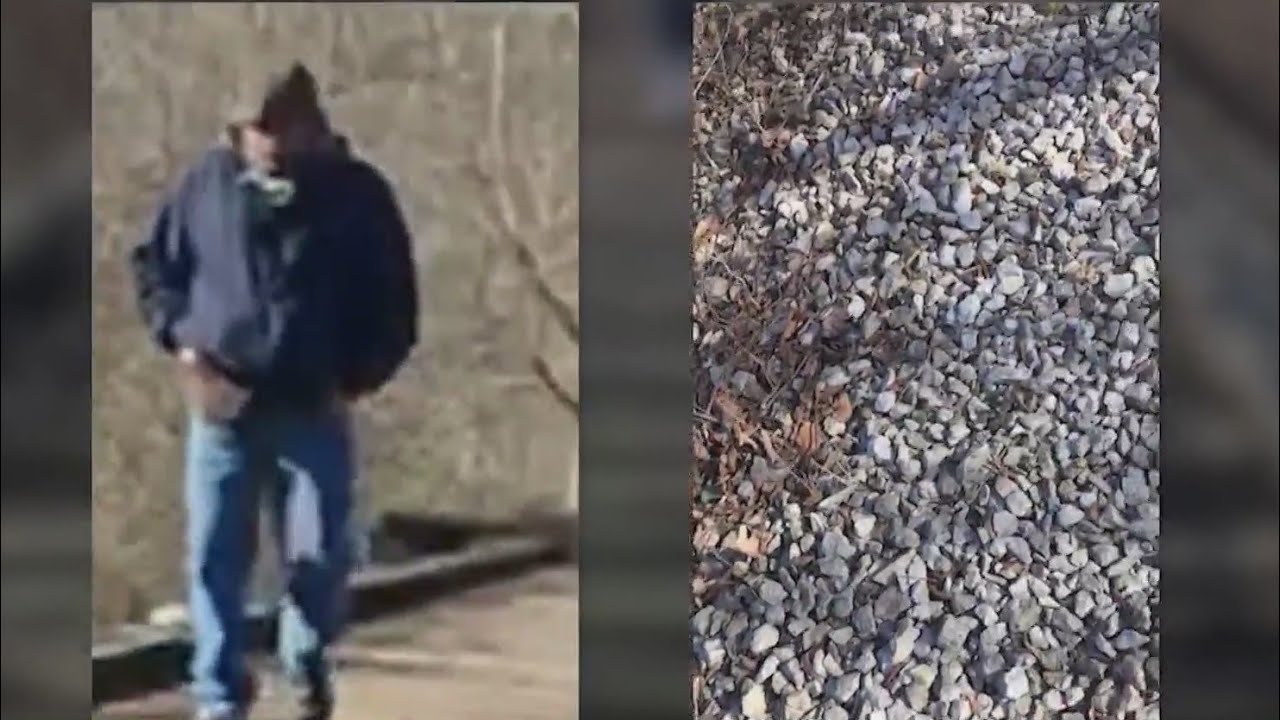
The most important piece of evidence in the Delphi murders is 43 seconds long, and the person who recorded it was one of the victims.
On the afternoon of February 13, 2017, 14-year-old Liberty "Libby" German raised her phone on the Monon High Bridge outside Delphi, Indiana, and filmed the man walking toward her and her best friend. Head down. Hands in pockets. Blue jacket, jeans. Then the audio that an entire country would eventually be able to recite from memory:
"Guys. Down the hill."
Libby and 13-year-old Abigail "Abby" Williams were found the next day, about a quarter mile from the bridge, on the north bank of Deer Creek. Their throats had been cut. It would take five and a half years to arrest the man prosecutors said was on that recording — and he had been hiding in plain sight the entire time.
Background: an ordinary afternoon
Delphi is a town of about 3,000 people in Carroll County, Indiana. February 13, 2017, was an unseasonably warm school holiday, and Libby's older sister dropped the girls off near the trailhead of the Monon High Bridge Trail around 1:35 p.m. — a familiar walk they'd done before, ending at the abandoned railroad bridge that towers over Deer Creek.
At 2:07 p.m., Libby posted a photo of Abby walking the bridge planks. Sometime in the minutes after, she started recording the man behind them.
When the girls missed their 3:15 pickup and didn't answer their phones, the family began searching. By nightfall, volunteers and police were combing the woods. The bodies were found the next day, February 14, staged in a way investigators withheld from the public for years — a detail that would matter enormously at trial.
The evidence Libby left behind
Investigators have called Libby German a hero, and the record supports the word choice: she documented her own killer.
- The video captured the man's build, gait, clothing — and, critically, his voice. Police released a grainy still ("bridge guy") almost immediately, an audio clip of "down the hill" two months later, and the fuller video years after.
- The sketches. Two composite sketches were released — one in 2017 of an older-looking man, one in 2019 of a younger man — and the 2019 press conference pointedly told the killer, "We know this is about power to you… we believe you are hiding in plain sight." The two sketches, which looked like different people, fueled years of confusion and amateur theories.
- The unspent round. Between the girls' bodies, investigators found a single unfired .40-caliber cartridge. It had no fingerprints — but a cycled round carries tool marks from the gun that chambered it. That cartridge would sit in evidence for five years, waiting for a gun to compare it to.
Hiding in plain sight — literally
Here is the fact that makes Delphi unlike almost any other case we've covered: Richard Allen told police he was there — in 2017.
Days after the murders, Allen — a CVS pharmacy technician who lived in Delphi and had processed photo orders for people in town — voluntarily contacted authorities to say he'd been walking the trail that afternoon, wearing a blue jacket and jeans, and had seen three girls but nothing suspicious. The tip was interviewed, written up… and misfiled — labeled in a way that kept it from ever surfacing in the suspect pool.
For five years, while the town scrutinized every stranger and the internet accused a parade of innocent men, the self-reported man in the blue jacket filled prescriptions a few minutes from the bridge.
In September 2022, a volunteer file clerk reorganizing tip records found the sheet. Investigators re-interviewed Allen, searched his home that October, and seized a SIG Sauer P226 pistol in .40 caliber. Indiana State Police laboratory analysis concluded the unspent round found between the victims had been cycled through Allen's SIG — the forensic thread connecting the man from the misfiled tip to the ground between the bodies.
Richard Allen, then 50, was arrested on October 26, 2022.
The wait for trial: confessions and chaos
The two years between arrest and trial were among the most turbulent in recent criminal-justice memory:
- The confessions. Held in solitary at a state prison while awaiting trial — an extraordinary arrangement for a pretrial detainee — Allen made dozens of incriminating statements: to his wife and mother on recorded phone calls ("I did it. I killed Abby and Libby."), to prison staff, and to a psychologist. The defense argued the isolation had broken him psychologically — that a man in a mental-health crisis confessed to everything and anything. Prosecutors noted one confession included a detail matching the withheld crime-scene evidence.
- The Odinism theory. Allen's defense filed a bombshell memorandum alleging the girls were killed in a ritualistic sacrifice by adherents of a Norse pagan sect, naming alternative suspects. The judge barred the theory from trial as lacking an evidentiary nexus — a ruling now central to the appeal.
- The leaks, the disqualifications, the drama. Crime-scene photos leaked. Allen's defense attorneys were briefly forced off the case, then reinstated. The saga generated headlines for months before a jury ever heard evidence.
The trial: November 2024
The case was tried in Delphi with a jury bused in from Allen County (Fort Wayne), sequestered for the duration — media were barred from broadcasting, so the country followed through reporters' daily dispatches.
The state's case braided four strands: Allen's own 2017 statement placing himself on the trail in matching clothing; witnesses who saw "bridge guy"; the ballistics testimony on the unspent round; and the confessions — including the crime-scene detail prosecutors said only the killer would know. The defense attacked every strand: the ballistics discipline as junk science, the confessions as the product of psychological torture in solitary, the timeline as leaving room for someone else.
After roughly 19 hours of deliberation, the jury convicted Allen on all four counts — two counts of murder and two of felony murder. On December 20, 2024, he was sentenced to the maximum: 130 years.
At sentencing, the families finally spoke directly to him. Libby's grandfather, who had helped raise her, told the court the girls did more to solve the case than anyone — that his granddaughter's 43 seconds of courage caught the man the state spent five years missing.
The appeal: September 21, 2026
The case is not over. Allen's appellate team has asked the Indiana Court of Appeals to overturn everything, on three main grounds:
- The search. The defense brief goes after the probable-cause affidavit sworn by the sheriff for the October 2022 search of Allen's home, arguing it was built on "deliberate falsehoods and material omissions" — including, they say, a statement that Allen had admitted wearing clothing matching "bridge guy," which they contend he never did. If the affidavit falls, the search falls; if the search falls, so does the seizure of the SIG Sauer and the ballistics match that anchored the case.
- The confessions. They contend statements made by a pretrial detainee held in prolonged solitary confinement — "deeply ill," in "unprecedented confinement" — were involuntary under federal due process and under Indiana's distinctive constitutional ban on treating prisoners with "unnecessary rigor." A pretrial detainee housed in a maximum-security prison, they argue, produced confessions that were symptoms, not statements.
- The defense he couldn't present. They argue that barring the alternative-perpetrator theory denied Allen his constitutional right to present a complete defense — that the jury convicted without ever hearing the story his lawyers wanted to tell.
The State of Indiana's answer brief, filed in March 2026, urges the court to let the convictions stand: the warrant was sound, the confessions voluntary and corroborated by a withheld crime-scene detail, and the excluded theory speculation without an evidentiary nexus.
The arguments happen Monday, September 21, 2026, at 10 a.m. — not in an ordinary appellate courtroom, but in the Supreme Court courtroom at the Indiana Statehouse, before a three-judge panel, with each side allotted 30 minutes. We've broken down what actually happens at an appellate oral argument, and the short version applies here: the questions the judges ask will be the first real signal of which pillars are in danger.
The stakes, mapped
- Search suppressed → the ballistics link to the unspent round likely goes with it → retrial with the state's physical case gutted.
- Confessions suppressed → retrial without the "only the killer would know" detail — but the 2017 self-report, the video, and the ballistics survive.
- Third-party ruling reversed → retrial where the defense finally presents its alternative-perpetrator theory to a jury.
- Affirmed on all grounds → expect a transfer petition to the Indiana Supreme Court, which takes only a fraction of such cases. If transfer is denied, the direct appeal is over and Allen's remaining paths narrow to post-conviction relief.
No ruling is expected for weeks to months after argument — realistically late 2026 or early 2027. The date is on the court dates tracker.
The full timeline
- February 13, 2017, ~1:35 p.m. — Libby's sister drops the girls at the Monon High Bridge trailhead. At 2:07 p.m., Libby posts a photo of Abby on the bridge; minutes later she records "bridge guy."
- February 14, 2017 — The bodies are found on the north bank of Deer Creek, about a quarter mile from the bridge. An unspent .40-caliber round lies between them.
- February 2017 — Richard Allen contacts police to report he was on the trail that day in a blue jacket and jeans. The tip is misfiled.
- July 2017 / April 2019 — The two composite sketches are released; the 2019 press conference warns the killer he is "hiding in plain sight."
- September 2022 — A volunteer clerk reorganizing tip files finds Allen's 2017 self-report.
- October 2022 — Allen's home is searched; the SIG Sauer P226 is seized; the state lab matches the unspent round. Allen is arrested October 26.
- 2023–2024 — Solitary confinement, dozens of incriminating statements, the Odinism defense memorandum, leaks, attorney disqualification and reinstatement.
- October–November 2024 — Trial in Delphi with a sequestered Allen County jury; convicted on all four counts after ~19 hours of deliberation.
- December 20, 2024 — Sentenced to 130 years, the maximum.
- March 2026 — The State files its answer brief opposing the appeal.
- May 2026 — The Court of Appeals grants oral argument.
- September 21, 2026 — Oral arguments at the Indiana Statehouse. Ruling expected late 2026–early 2027.
Why this case file matters
Every case leaves a record, but Delphi inverted the usual order: the record came first. The victim filmed the killer before the crime, the killer reported himself to police within days, and the physical evidence sat matched-but-unmatched in an evidence room for five years. Nothing about the case was hidden. All of it was simply unconnected.
It took a misfiled tip sheet, a volunteer clerk, and one unspent cartridge to finally close the loop — and a 14-year-old's steady hand to make any of it possible.
Case status as of this writing: convicted on all counts and serving 130 years; direct appeal pending, with oral arguments before the Indiana Court of Appeals scheduled for September 21, 2026. Allen maintains his innocence through counsel on appeal. This article is based on trial evidence as described in court, charging and appellate filings, official statements, and contemporaneous reporting. Photo: the suspect image recorded by Libby German on the Monon High Bridge, released by Indiana State Police (public record).
Reported to our editorial standards: records first, charges reported as charges, corrections welcomed.
Frequently asked questions
Who were the victims of the Delphi murders?+
Abigail 'Abby' Williams, 13, and Liberty 'Libby' German, 14 — best friends from Delphi, Indiana, killed on February 13, 2017, after being dropped off to hike the Monon High Bridge trail.
What is the 'bridge guy' video?+
In the final minutes of her life, Libby German recorded video on her phone of a man walking toward the girls on the Monon High Bridge. The footage — and its audio of the man saying 'Guys. Down the hill.' — became the case's central evidence and one of the most famous pieces of victim-recorded evidence in American crime history.
How was Richard Allen identified as a suspect?+
Allen had actually reported himself to police in 2017 as a man who was on the trail that day, but the tip was misfiled for years. When it resurfaced in 2022, investigators matched his account, clothing, and vehicle to the timeline — and an unspent round found between the victims' bodies was determined by state examiners to have been cycled through Allen's pistol.
What was the verdict in the Delphi murders trial?+
In November 2024, a jury convicted Richard Allen on all counts — two counts of murder and two counts of felony murder. In December 2024 he was sentenced to 130 years in prison, the maximum available.
Is Richard Allen appealing his conviction?+
Yes. His appeal argues the search of his home was unconstitutional, that his prison confessions were involuntary, and that the defense was wrongly barred from presenting an alternative-perpetrator theory. The Indiana Court of Appeals hears oral arguments at 10 a.m. on September 21, 2026, in the Supreme Court courtroom at the Indiana Statehouse, with each side allotted 30 minutes before a three-judge panel.
What happens if Richard Allen wins his appeal?+
It depends which argument wins. If the court suppresses the search or the confessions, the likely result is a new trial without that evidence. If it finds the excluded third-party defense violated his rights, the remedy is also a retrial where that defense can be heard. Winning the appeal would not free him outright in any likely scenario — it would send the case back for a new trial. If he loses, his team can petition the Indiana Supreme Court to take the case.
When will the appeals court rule on the Delphi case?+
There is no deadline. Indiana appellate panels typically rule weeks to several months after oral argument, so a decision is realistically expected in late 2026 or early 2027. Whichever side loses is likely to seek transfer to the Indiana Supreme Court, which would add more months.
Where is Richard Allen now?+
He is serving his 130-year sentence in the Indiana Department of Correction. He maintains his innocence through counsel on appeal.
Stay On The Case
Get the next case file first
One email when a new case drops — footage, records, and the full breakdown.
Subscribe on YouTubeRelated case files
 Trials & Verdicts
What Actually Happens at an Appeal Hearing (It's Not a Retrial)
No jury, no witnesses, no new evidence — just judges, lawyers, and hard questions. What a criminal appeal oral argument really is, and how to watch one intelligently.
 Trials & VerdictsRETRIAL PENDING
Alex Murdaugh: The Kennel Video, the Verdict — and the Stunning Reversal
A dynasty lawyer, his murdered wife and son, a Snapchat video that destroyed his alibi — and in 2026, a Supreme Court ruling that erased the verdict. The full Murdaugh case file.
 Crime News
True Crime Court Dates Tracker: Every Big Case Hearing in 2026
When does the Lindsay Clancy trial start? Luigi Mangione's trial? Richard Allen's appeal? The Murdaugh retrial? Every major true crime court date ahead, tracked and updated.