Mackenzie Shirilla: The 100-MPH Crash a Judge Called Murder
A 17-year-old, a Toyota Camry at full throttle, and two young men dead against a brick wall. Accident or murder? The data recorder answered — the full case file.
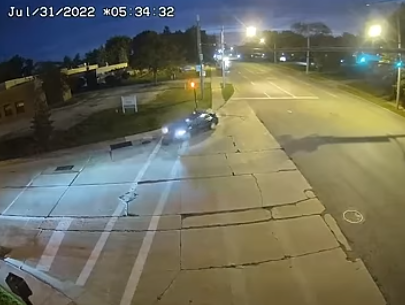
The Toyota Camry left the road in Strongsville, Ohio, in the early morning of July 31, 2022, crossed a parking lot, and hit the brick wall of the Plidco industrial building without ever slowing down. In the wreckage: Dominic Russo, 20, and Davion Flanagan, 19, both dead — and behind the wheel, 17-year-old Mackenzie Shirilla, alive.
For a year, the question in Cuyahoga County was the oldest one in traffic court: terrible accident, or something else? Then the data came out.
Background: a volatile relationship
Shirilla was a Strongsville teenager; Russo was her boyfriend. Prosecutors described the relationship as troubled and on-again, off-again, and introduced statements and messages they said showed Shirilla had spoken about crashing her car before — including, in text messages that surfaced publicly after trial, language prosecutors characterized as threats aimed at Russo.
The defense told a different story from day one: a young driver, a powerful moment of inattention or loss of control, a tragedy — not a crime.
Flanagan, by every account, was simply along for the ride that morning.
The evidence: what the car remembered
Modern cars keep their own records. The Camry's event data recorder — the black box — preserved the final seconds before the wall:
- Throttle: 100%. The accelerator was pressed to its full extent and held there.
- Speed: roughly 100 mph on a short suburban access road.
- Brakes: never applied. No pre-impact braking was recorded at all.
Surveillance video added the part the numbers couldn't show. The car doesn't fishtail, swerve, or correct. In the prosecution's telling, it aims — a smooth, continuous acceleration that ends at the building. Investigators also noted the steering held its line into the wall.
At trial, the state stacked those layers — the EDR data, the video, the prior statements — into a single argument: this was not a car that got away from its driver. This was a car doing exactly what its driver told it to do.
The trial: "hell on wheels"
Shirilla waived a jury, putting the verdict in the hands of a single judge — Cuyahoga County Common Pleas Judge Nancy Margaret Russo (no relation to the victim).
In August 2023, the judge convicted Shirilla on 12 felony counts, including murder, felonious assault, and aggravated vehicular homicide. Reading the verdict, she delivered the lines the case is now remembered by:
"This was not reckless driving. This was murder."
The judge described Shirilla as "literal hell on wheels" — a phrase that made national headlines within hours.
The sentence: life in prison, with parole eligibility after 15 years. Shirilla, who was 17 at the time of the crash and 18 at sentencing, was sent to the Ohio Reformatory for Women.
The appeal: the POTS question
The verdict did not end the fight. Shirilla's appellate lawyers have now challenged the conviction multiple times — unsuccessfully in the lower courts — and as of 2026 have asked the Ohio Supreme Court to take the case.
Their central argument is not that the data was wrong, but that her trial lawyers failed her: specifically, that they never adequately investigated whether Shirilla suffers from POTS (postural orthostatic tachycardia syndrome), a condition that can cause fainting, and whether she could have lost consciousness before impact.
It's a theory that has to answer hard questions — a foot that stays planted at 100% throttle, a wheel that holds its line — and so far no court has been persuaded to reopen the verdict. But the filing keeps the case legally alive, and it's the main thing to watch on this file.
The aftermath
- The families. Two sets of parents buried sons who were 19 and 20. Both families have spoken publicly about the loss and sat through a trial where the final seconds of their sons' lives were replayed in data and video.
- The documentary. Netflix's The Crash began streaming on May 15, 2026, bringing the case to a global audience and featuring Shirilla's first interview since her conviction, recorded from prison — where records released the same year documented a long list of disciplinary violations.
- The precedent. The case is now a reference point in a genuinely hard corner of criminal law: proving intent behind a steering wheel, where the line between recklessness and murder is drawn by data most drivers don't know their own car is recording.
Where is Mackenzie Shirilla now?
Shirilla is incarcerated at the Ohio Reformatory for Women in Marysville, Ohio, serving life with parole eligibility after 15 years — which puts her first parole hearing around September 2037. Two things have kept her name in the news since sentencing:
- The prison interview. The Crash is built around her own account, on camera, from prison — the first time she has spoken publicly since the verdict. Viewers looking for remorse, explanation, or the POTS theory in her own words will find all three argued over by the families, the prosecutors, and the filmmakers.
- The disciplinary record. Prison records released in 2026 documented repeated rule violations during her incarceration — a record that would be in front of any future parole board.
Her legal team's request that the Ohio Supreme Court review the case (the POTS/ineffective-counsel theory below) remains the only live path that could change any of this. For the current status of that filing, check our court dates tracker.
Why this case file matters
There were no eyewitnesses to what happened inside that Camry, and the only survivor said it was an accident. The conviction was built almost entirely on the kind of evidence this channel exists to examine: recorded data, camera footage, and the record of what was said before.
The car remembered the throttle. The camera remembered the path. And a judge decided that between those two records, there was no room left for an accident.
The same question — when does catastrophic speed become murder? — goes before a Los Angeles County jury in September 2026 in the Fraser Bohm case, where a driver allegedly hit 104 mph on the Pacific Coast Highway and killed four Pepperdine students.
Case status as of this writing: convicted on all counts and serving life with parole eligibility after 15 years; a discretionary appeal is pending before the Ohio Supreme Court. This article is based on trial evidence as described in court, public records, and contemporaneous reporting. Photo: surveillance still of Shirilla's vehicle minutes before the crash, July 31, 2022 — released as case evidence.
Reported to our editorial standards: records first, charges reported as charges, corrections welcomed.
Frequently asked questions
What did Mackenzie Shirilla do?+
In July 2022, 17-year-old Mackenzie Shirilla drove her Toyota Camry at roughly 100 mph into a brick building in Strongsville, Ohio, killing her boyfriend Dominic Russo, 20, and his friend Davion Flanagan, 19. A judge found the crash was intentional and convicted her of murder in 2023.
How did prosecutors prove the crash was intentional?+
The car's event data recorder showed the accelerator pressed to 100% and no braking before impact, and surveillance video captured the car accelerating smoothly into the wall rather than swerving or losing control. The judge cited that combination as evidence of purpose rather than recklessness.
What was Mackenzie Shirilla's sentence?+
After a bench trial in August 2023, she was convicted on 12 felony counts, including murder, and sentenced to life in prison with parole eligibility after 15 years.
Is Mackenzie Shirilla appealing her conviction?+
Yes. Her direct appeals have been unsuccessful, and as of 2026 her attorneys have asked the Ohio Supreme Court to review the case, arguing trial counsel failed to investigate whether a fainting condition called POTS could have caused her to lose consciousness before the crash.
Is there a documentary about the Mackenzie Shirilla case?+
Yes. 'The Crash' began streaming on Netflix on May 15, 2026, revisiting the case and its aftermath. It features Shirilla's first interview since her conviction, recorded from prison, and renewed public attention on her pending appeal.
Where is Mackenzie Shirilla now?+
She is serving her life sentence at the Ohio Reformatory for Women in Marysville, Ohio. Her first parole hearing is not expected until September 2037, fifteen years into her sentence. Prison records released in 2026 documented a series of disciplinary violations during her incarceration.
Stay On The Case
Get the next case file first
One email when a new case drops — footage, records, and the full breakdown.
Subscribe on YouTubeRelated case files
 Trials & VerdictsVERDICT: GUILTY
Blaise Taylor: The NFL Scout, the Pink Lemonade, and a Two-Hour Verdict
She told a friend, 'I know you put something in my drink.' Nine days later she was dead. On July 1, 2026, a Nashville jury took two hours to convict the ex-Titans scout. The full case file.
 Trials & VerdictsON TRIAL
Sarah Grace Patrick: The TikTok Griever Now Facing a Double-Murder Jury
She posted grief videos, gave the eulogy, and begged the internet to find her parents' killer. Then Georgia charged her with the murders. The trial, previewed.
 Trials & VerdictsON TRIAL
The Bridegan Murder-for-Hire Trials: Two Juries, Six Weeks, One Ambush
A Microsoft executive shot in front of his toddler, an ex-wife and her husband headed to back-to-back murder trials, and a hitman who took it all back. The full pre-trial file.