The Murder of David Nixon: Secrets and Lies on Grapevine Lake
A Grapevine, Texas real-estate agent vanished in April 2002 — and four days later a motorist found a body burning in a Grand Prairie parking lot. The full David Nixon case: the evidence, the trial, and how a loyalty card helped convict Tracey Frame.
On April 22, 2002, a passing motorist in Grand Prairie, Texas, saw a fire burning in the parking lot of an abandoned building and stopped. What was burning was a body — wrapped in a blue camping tarp and an electric blanket, soaked in gasoline, damaged beyond recognition. Dental records gave it a name: David Nixon, a 40-year-old real-estate agent from Grapevine, the lakeside city between Dallas and Fort Worth.
Four days earlier, Nixon had been doing something completely ordinary: showing a property in Southlake. The woman he lived with told everyone who asked that David had simply left.
This is the case that television would later call the Grapevine Lake murder — and it remains one of the cleanest examples on record of a killing proved not by witnesses, but by receipts.
Who David Nixon was
Nixon was a successful agent working the booming mid-cities real-estate market, and for about three years he shared a home in Grapevine, near Grapevine Lake, with his girlfriend, Tracey Ann Frame. Acquaintances described them as a popular, fun-loving couple — until money started doing what money does. Nixon had financial obligations to his ex-wife and children; Frame had sunk roughly $80,000 into the house; and by the spring of 2002 the relationship was coming apart loudly enough that on April 9, 2002, Grapevine police were called to the home for a domestic disturbance.
Nine days later, on April 18, Nixon was seen alive for the last time. On April 20, his ex-wife reported him missing. On April 22, the motorist in Grand Prairie found the fire.
A murder proved by ordinary records
No one saw David Nixon die. Prosecutors argued Frame shot him at the home they shared — the medical examiner put the cause of death at a single gunshot wound to the torso, with the burning done after death — and then spent days methodically erasing the evidence. What convicted her was the paper trail that erasing leaves:
- The loyalty card. Store security footage showed a woman resembling Frame buying muriatic acid — and the purchase was logged to her own customer rewards card.
- The rental truck. Investigators matched tire tracks to a moving van Frame had rented; video placed her in the areas where Nixon's Lexus and the rental truck were later abandoned.
- The house. A handgun kept in the home was missing, and the bed where prosecutors said Nixon was shot had a brand-new mattress.
- The stories. Frame's explanations for where David had gone kept shifting.
The day after she finally sat down with detectives, Frame was arrested. In March 2005, a Tarrant County jury needed about four hours to convict her of first-degree murder. The sentence: 40 years.
Frame has always had defenders who ask whether a fully circumstantial case proved enough — a question this genre never stops arguing. But the conviction has held, and Frame remains in Texas state prison. For where she's held, the parole math, and the answer to the "has she been released?" question that spikes every time a rerun airs, see our full Tracey Frame file — where she is now.
Why the case is called "the Grapevine Lake murder"
The name comes from television. CBS's 48 Hours covered the case as "Secrets and Lies on Grapevine Lake"; Forensic Files told it as "Separation Anxiety"; Oxygen's Snapped gave Frame an episode of her own. Three franchises, cycling endlessly on streaming platforms, have kept a 2002 Texas case permanently in the rerun rotation — and every cycle sends a new audience searching for what the episodes leave at the credits.
The geography, for the record: Nixon lived — and, per the state, died — in Grapevine, the city on Grapevine Lake's southern shore. His body was found roughly twenty miles away in Grand Prairie. The lake gave the case its name; the parking lot gave it its evidence.
Why this case file matters
The David Nixon murder is a foundational entry in the genre we cover most: the fully circumstantial conviction. Nobody saw the shot. The case was a loyalty card, a tire track, a missing gun, and a new mattress — ordinary records made damning by arrangement, like the Larry Millete conviction and the no-body convictions we've broken down before. Twenty years of reruns later, it's still the cleanest classroom example of how juries convict when the evidence is everything except an eyewitness.
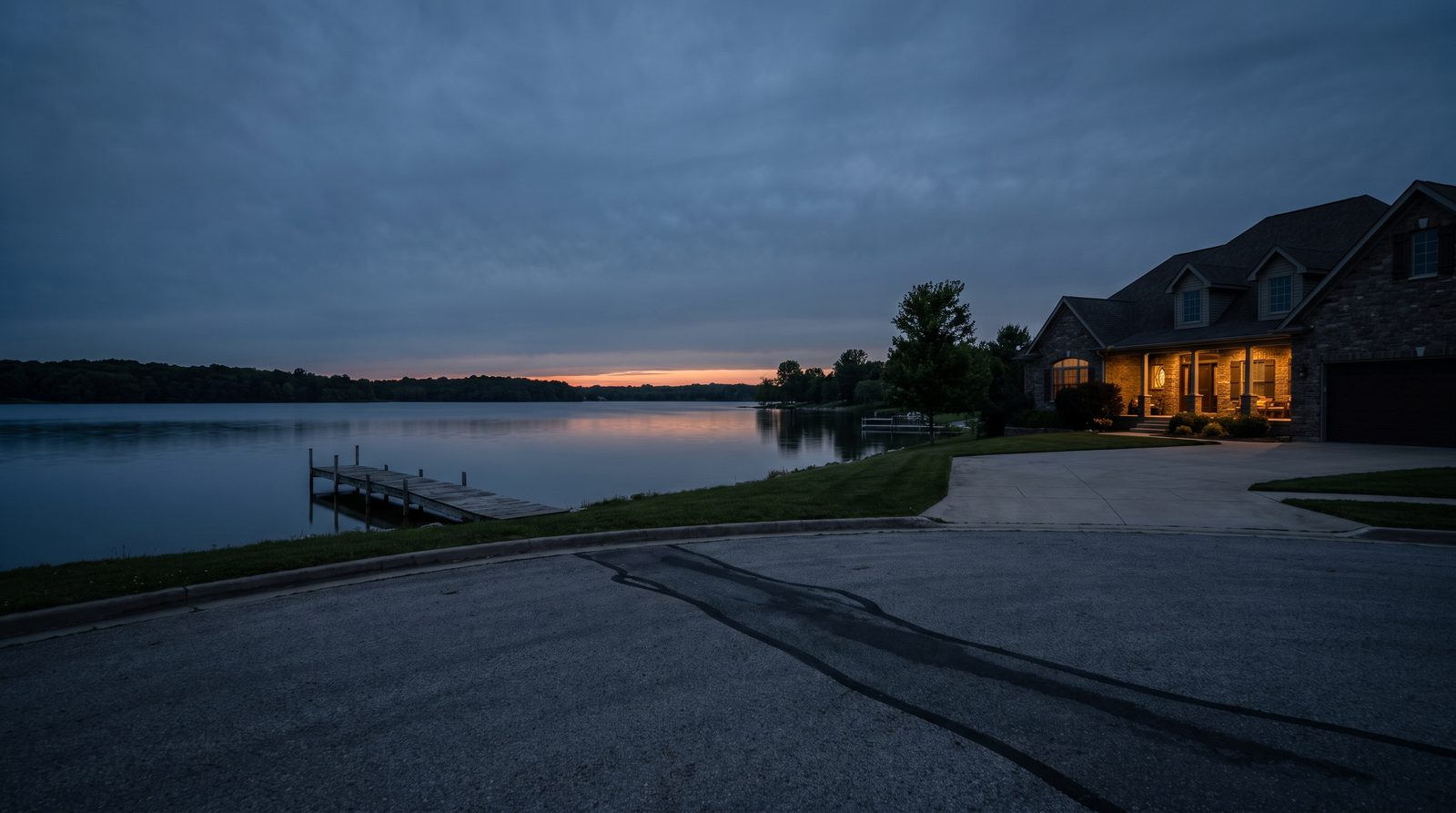
Case status as of this writing: Tracey Ann Frame was convicted of first-degree murder in March 2005 and sentenced to 40 years; she is incarcerated in the Texas Department of Criminal Justice, parole-eligible since September 2024 with no grant of parole in the public record. This article is based on trial coverage, court records, and the documentary record, including CBS's 48 Hours and Forensic Files. Featured image: AI illustration of Grapevine Lake at dusk created for this article; it does not depict real persons or the actual crime scene.
Reported to our editorial standards: records first, charges reported as charges, corrections welcomed.
Frequently asked questions
Who was David Nixon?+
David Nixon was a 40-year-old Texas real-estate agent who lived in Grapevine, Texas, near Grapevine Lake, with his girlfriend Tracey Frame. Friends described the couple as popular and fun-loving before the relationship deteriorated over money. He was last seen alive on April 18, 2002, showing a property in Southlake.
Who killed David Nixon?+
A Tarrant County jury convicted his live-in girlfriend, Tracey Ann Frame, of first-degree murder in March 2005, finding that she shot him at the home they shared and then tried to destroy the evidence by burning his body. She was sentenced to 40 years and remains in Texas state prison.
How did David Nixon die?+
The medical examiner testified Nixon died of a single gunshot wound to the torso, and that his body was burned after death. On April 22, 2002, a motorist found his body burning in the parking lot of an abandoned building in Grand Prairie — wrapped in a tarp and an electric blanket and doused with gasoline. He was identified through dental records.
What was the Grapevine Lake murder?+
'The Grapevine Lake murder' is the name that attached to the David Nixon case through TV coverage — most prominently the CBS 48 Hours episode 'Secrets and Lies on Grapevine Lake.' Nixon lived and was killed in Grapevine, Texas, the lakeside city between Dallas and Fort Worth; his body was moved and burned in Grand Prairie.
What evidence convicted Tracey Frame?+
The case was entirely circumstantial: security footage of a woman resembling Frame buying muriatic acid, logged to her own store loyalty card; tire tracks consistent with a rental moving van she had hired; video placing her where Nixon's Lexus and the rental truck were abandoned; a handgun missing from the house; a brand-new mattress in the bedroom; and her shifting stories about where David had gone. The jury deliberated about four hours.
What TV shows covered the David Nixon murder?+
CBS's 48 Hours told the case as 'Secrets and Lies on Grapevine Lake,' Forensic Files covered it in the episode 'Separation Anxiety,' and Oxygen's Snapped devoted an episode to Tracey Frame. Streaming reruns of those episodes are why the case keeps finding new audiences two decades later.
Stay On The Case
Get the next case file first
One email when a new case drops — footage, records, and the full breakdown.
Subscribe on YouTubeRelated case files
 Case FilesVERDICT: GUILTY
Where Is Tracey Frame Now? The Grapevine Lake Murder, 20 Years Later
She told everyone David Nixon just left. His burned body said otherwise. Where Tracey Frame is imprisoned, her parole status, and the case behind 'Separation Anxiety' — the full file.
 Case FilesTRIAL: SEPT 8, 2026
Fraser Bohm: 104 MPH on Dead Man's Curve — and Why It's Charged as Murder
Four Pepperdine sorority sisters killed on the PCH. No gun, no knife — a BMW at 104 mph. A judge just refused to dismiss the murder charges. The September trial, previewed.
 Case FilesCASE CLOSED
The Bakersfield Hostage Crisis: 15 Hours Inside the Chase Building
A man with a bomb claim walked into a downtown Bakersfield office building and took 10 school employees hostage. Fifteen hours later the FBI's Hostage Rescue Team ended it. What really happened — and why.