The Bakersfield Hostage Crisis: 15 Hours Inside the Chase Building
A man with a bomb claim walked into a downtown Bakersfield office building and took 10 school employees hostage. Fifteen hours later the FBI's Hostage Rescue Team ended it. What really happened — and why.
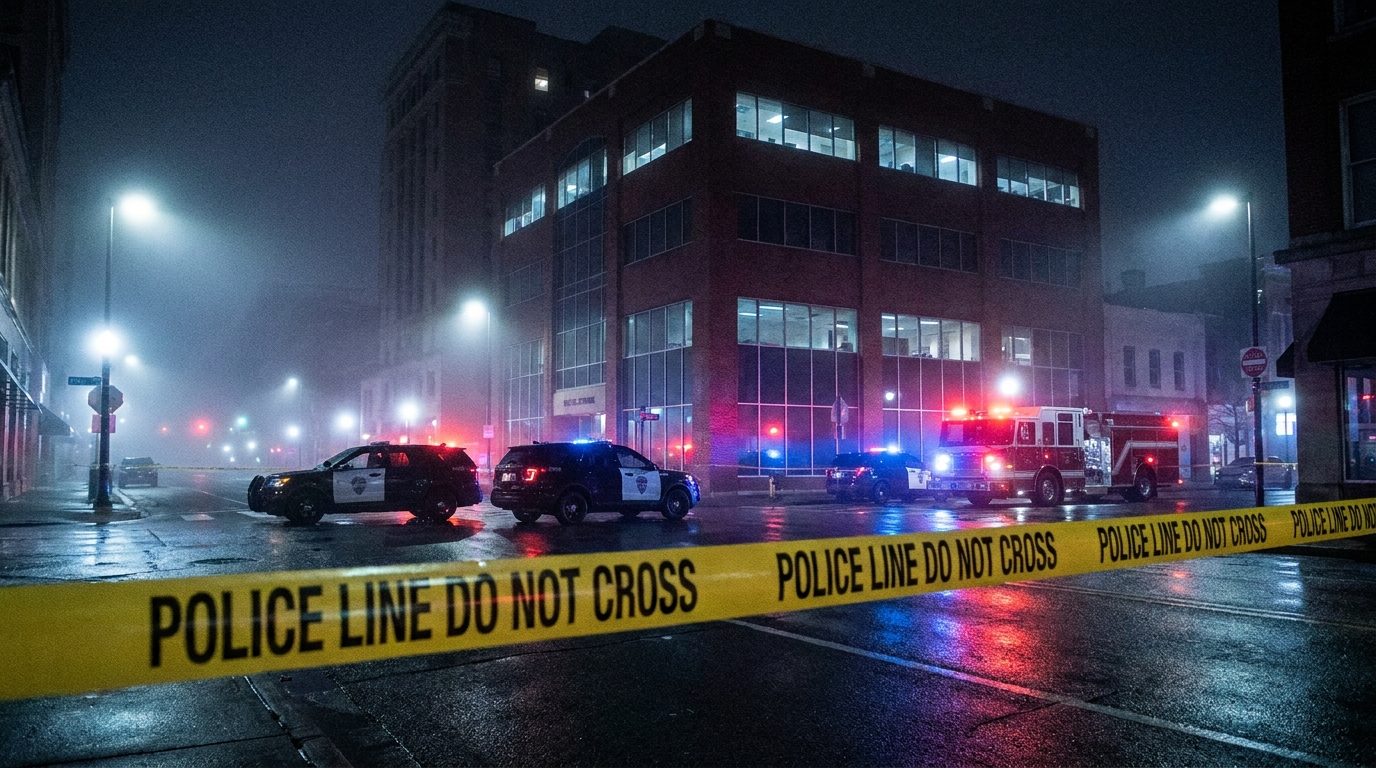
At 12:59 p.m. on June 2, 2026, calls started coming into Bakersfield police: a man had walked into the Chase Bank building at Chester Avenue and 17th Street, in the middle of downtown, saying he had explosives. By the time officers set a perimeter, he was on the second floor — not in the bank, but in the offices of the Kern County Superintendent of Schools — and ten school-system employees were locked in with him.
For the next fifteen hours, one of the largest FBI deployments in the region's history surrounded one man in an office building. This is the full file on how it unfolded, minute by minute — and what we know about why.
The man on the second floor
Police identified the hostage-taker as Anthony Scott Searles-Harris, 41, a resident of Oildale, just across the river from downtown Bakersfield.
His record, per court records and law enforcement: a short stint in the U.S. Army in 2006–2007 that ended in a dishonorable discharge after he went AWOL. An arrest in October 2012 in a case involving two minors, ages 13 and 17. A 2014 conviction and a 12-year sentence — followed by release in 2018, after a state appeals court reversed one of the convictions. He remained a registered sex offender.
And then, in October 2025, a YouTube video. He titled it "Labeled a Monster." In it, he claimed law enforcement had planted the evidence that convicted him. Eight months later, he walked into the Chase building.
Fifteen hours, by the clock
- 12:59 p.m., June 2 — Bakersfield police receive calls about a man with explosives entering the building. He barricades himself on the second floor with ten Kern County Superintendent of Schools employees.
- ~1:30 p.m. — The FBI is notified. The response ultimately grows to more than 150 FBI personnel: SWAT, crisis negotiators, Special Agent Bomb Technicians, and — flown in from Quantico — the Hostage Rescue Team, the government's full-time counterterrorist hostage unit.
- 3:59 p.m. — Negotiators secure the first hostage release.
- 8:24 p.m. — A second hostage walks out. Per the FBI, the releases were negotiated in exchange for food, water — and materials from Searles-Harris's old criminal case.
- 9:02 p.m. — The FBI formally assumes operational control from Bakersfield PD.
- 2:00 a.m., June 3 — Command transitions to the Hostage Rescue Team.
- ~4:30 a.m. — HRT operators enter the second floor. Searles-Harris is fatally shot. The remaining eight hostages walk out unharmed.
Every one of the ten hostages survived. The only person who died in the Chase building was the man who took it over.
The bomb that wasn't
Through the night, Searles-Harris claimed explosives were strapped to himself and to five of the hostages — the claim that shaped the entire response, kept officers back, and put bomb technicians from Sacramento, Los Angeles, and San Francisco on scene.
After it ended, the FBI's assessment of the devices was blunt: "they were not a concern to us." Whatever he carried in, it was not the bomb he claimed it was. But for fifteen hours, no one inside that perimeter could know that — which is exactly why the claim worked as long as it did.
The demand that told the story
Hostage negotiators trade for time, and what a hostage-taker asks for is usually the closest thing to a motive anyone gets. Searles-Harris didn't ask for money or a getaway. He asked for his case file.
Investigators never announced a formal motive — he didn't survive to explain himself, and no manifesto beyond the 2025 video has been made public. But the shape of it is hard to miss: a man who spent years insisting online that his conviction was built on planted evidence, taking hostages in exchange for the paperwork of the case that, in his own telling, ruined his life. The FBI's review of the incident, including the agent-involved shooting — standard procedure in any HRT operation — continued after the scene cleared.
The people who walked out
The ten hostages were employees of the Kern County Superintendent of Schools — administrators who came to work on a Tuesday and spent the next fifteen hours as leverage. County schools chief Dr. John Mendiburu called it "a terribly frightening experience" and credited his staff's composure through the night, alongside the negotiators who kept the releases coming.
It's worth sitting with how rare this outcome is. Mass-hostage incidents with a claimed bomb, a barricaded subject, and a forced tactical entry end badly more often than anyone in law enforcement likes to say. Ten for ten, with the entry team taking fire risk onto themselves in the pre-dawn dark, is the best version of the worst night these agencies train for.
For the cases from this file still moving through the courts — trials, appeals, and hearings we're tracking every week — keep our court dates tracker bookmarked.
Why this case file matters
The Bakersfield crisis is what it looks like when a grievance metastasizes in public view. The warning sign wasn't hidden — it was posted to YouTube with a title, eight months before he acted. And the resolution is a case study in modern crisis response: negotiators trading case files for hostages, bomb techs working a threat they couldn't verify, and a decision made at 4:30 a.m. that saved eight lives and ended one. However the FBI's final review reads, this file is how fifteen hours in downtown Bakersfield became the standard other standoffs will be measured against.
Case status as of this writing: the hostage-taker was killed during the FBI operation on June 3, 2026, and was never charged in connection with the standoff; descriptions of his conduct reflect law enforcement accounts. His prior 2014 conviction is a matter of court record; one count was reversed on appeal in 2018. The FBI's post-incident review is standard procedure. This article is based on FBI and Bakersfield Police statements and contemporaneous reporting. Photo: illustration of the downtown Bakersfield police perimeter — not a news photograph.
Reported to our editorial standards: records first, charges reported as charges, corrections welcomed.
Frequently asked questions
What happened in the Bakersfield hostage crisis?+
On June 2, 2026, Anthony Scott Searles-Harris, 41, entered the Chase Bank building at Chester Avenue and 17th Street in downtown Bakersfield and took ten Kern County Superintendent of Schools employees hostage on the second floor, claiming to have explosives. After roughly 15 hours of negotiation, the FBI's Hostage Rescue Team entered around 4:30 a.m. on June 3 and fatally shot him. All ten hostages survived.
Were the explosives in the Bakersfield standoff real?+
According to the FBI, no functional threat was found. Searles-Harris claimed devices were attached to himself and to five of the hostages, but bomb technicians flown in from Sacramento, Los Angeles, and San Francisco assessed the devices and concluded, in the FBI's words, that 'they were not a concern to us.'
Who was Anthony Searles-Harris?+
A 41-year-old Oildale resident and registered sex offender. He served briefly in the U.S. Army in 2006–2007 before being dishonorably discharged for going AWOL. In 2014 he was convicted in a case involving sex acts with minors and sentenced to 12 years; he was released in 2018 after an appeals court reversed one of the convictions. He was killed during the standoff and was never charged in connection with it.
Why did he take hostages?+
Investigators have not announced a definitive motive. During negotiations he asked for materials from his old criminal case, and in an October 2025 YouTube video titled 'Labeled a Monster' he claimed evidence in that case had been planted. The FBI's investigation into the incident and the agent-involved shooting is standard procedure and was ongoing after the crisis ended.
Were any hostages hurt in the Bakersfield standoff?+
No. Two hostages were released through negotiation on the evening of June 2, and the remaining eight were rescued unharmed when the FBI's Hostage Rescue Team entered the building at about 4:30 a.m. on June 3. The only person killed was the hostage-taker.
Stay On The Case
Get the next case file first
One email when a new case drops — footage, records, and the full breakdown.
Subscribe on YouTubeRelated case files
 Case FilesDECERTIFIED — NEVER CHARGED
Betrayal: Dirty Secrets True Story — The Joel Kern Internal Affairs File
Yes — Hulu's Betrayal: Dirty Secrets is real. Colorado Springs Lt. Joel Kern's double life, the internal affairs file that ended his badge, and why he was never charged.
 Case FilesVERDICT: GUILTY
The Crash on Netflix: The True Story, What the Documentary Leaves Out, and What's Happened Since
Netflix's The Crash gave Mackenzie Shirilla her first interview since a judge called her 100-mph crash murder. Here's the full true story behind the documentary — and everything that's happened in the case since the cameras stopped.
 Case Files
Worst Neighbor Ever Episode Guide: Every Episode and the Real Case Behind It
All 4 episodes of Netflix's Worst Neighbor Ever, matched to the real cases — who the neighbors were, who died, where it happened, and what the show left out. Plus the season 2 picture.