Inside the USPS Whistleblower File: One Bad Barcode, 10,000 Rejected Ballots
We read the 27-page whistleblower disclosure just filed in federal court over the Postal Service's new mail-ballot 'Portal' — a system built in weeks, tested for days, and designed so a single failed barcode scan rejects an entire batch of ballots. What the court file actually says, who's alleging what, and where the litigation stands two months before the midterms.
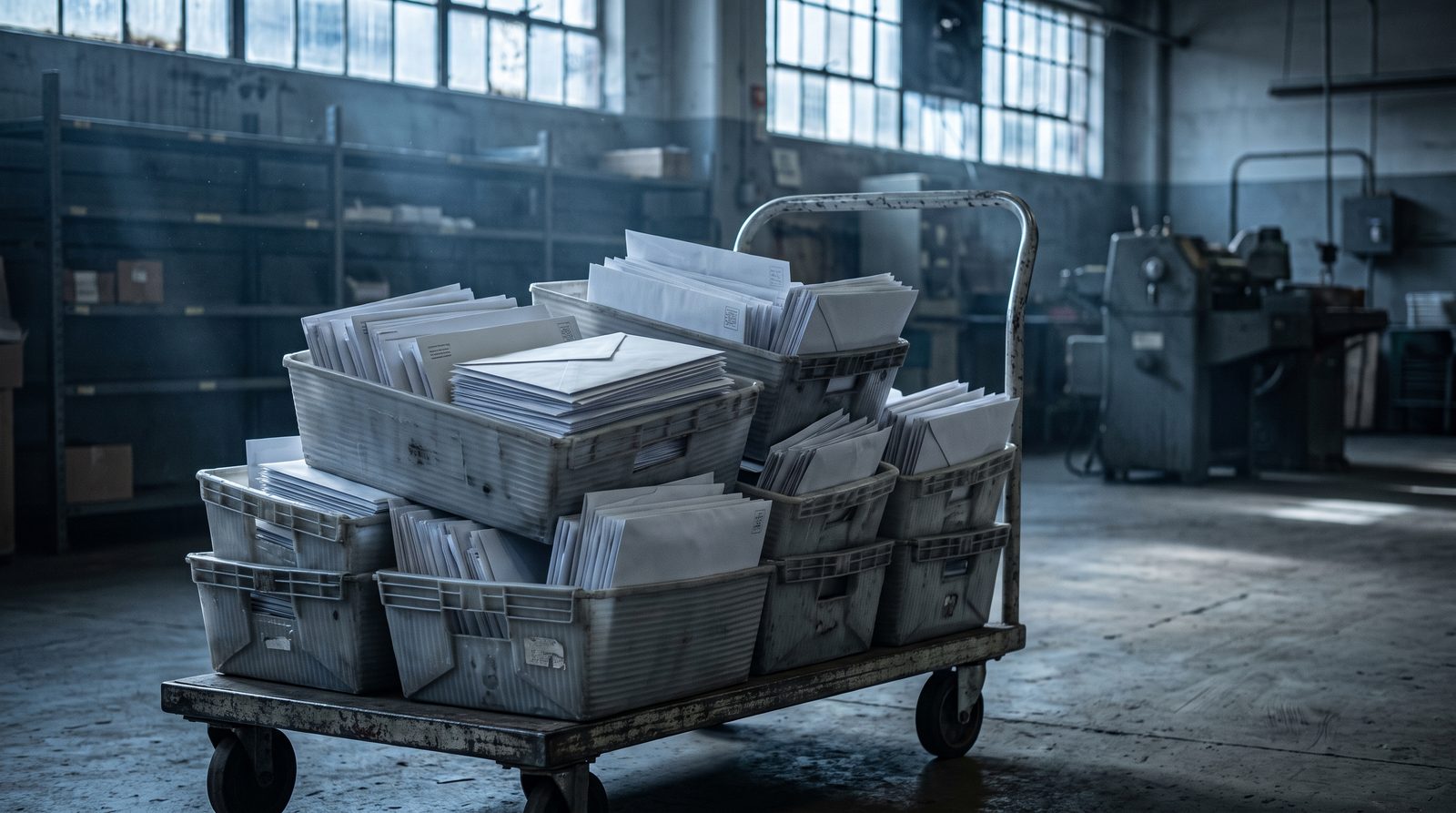
On September 1 — the very day the Postal Service planned to switch on its new ballot-screening system — lawyers for the League of Women Voters walked a 27-page exhibit into federal court in Boston: an anonymous whistleblower disclosure from inside USPS, warning that the system is so rushed and so unforgiving that it could, in the whistleblower's words, cause a "catastrophic failure" that "could derail the midterm elections." (League of Women Voters of Mass. v. Trump, No. 1:26-cv-11549-IT, Dkt. 265.)
Most coverage of this story is one layer removed — summaries of a senator's press release about a letter about a disclosure. We pulled the actual court filing and read all of it: the plaintiffs' notice, Senator Richard Blumenthal's August 31 letter to Postmaster General David Steiner, and the full whistleblower disclosure prepared by Whistleblower Aid. Here is what the documents actually say — and, just as important, what they are: allegations from an anonymous official, filed into a lawsuit by one side of it, that USPS has not yet publicly answered.
What the rule actually does
Start with the thing being fought over. Under a final rule published August 26, 2026 (91 Fed. Reg. 54,966), implementing Section 3 of President Trump's Executive Order 14399 on election procedures, the Postal Service would — for the first time — act as a gatekeeper for ballot mail. Historically, per the filings, ballots went out like any bulk First-Class mailing. Under the rule, state election officials must first upload every mail voter's name and ballot barcode into a new online system — the Federal Ballot Mail Portal — and every batch of ballots is then verified against it twice: digitally, when the batch manifest is uploaded, and physically, when postal clerks scan a sample of the actual envelopes at the counter. Fail either check, and USPS refuses to accept the ballots. For scale: in the 2022 midterms, states mailed over 61 million ballots.
The rule itself describes the process as "straightforward" and quick — "potentially only a few minutes for smaller mailings." The disclosure describes something else.
The design choice at the center: zero percent failure
The single most consequential allegation in the file is about a number: zero. According to the disclosure, USPS has adopted a zero-percent failure standard for the physical scan — and under it, "if even one bar code on one single ballot in a bulk-mailing of 10,000 ballots fails to properly scan during the verification process, the entire batch is rejected and sent back to the state — effectively stopping the ballots from being mailed to voters." One unreadable barcode; 9,999 rejected ballots. The state must haul the batch back, cure the single problem ballot, and restart the whole verification cycle. (Disclosure ¶¶ 2, 27–28.)
The whistleblower's supporting details are specific. The sampling plan, per the disclosure: batches under 1,000 ballots get 15 scans; 1,000–10,000 get 350; over 10,000 get 400 — numbers that were still being debated a week before launch. Scanning errors are not hypothetical: a 2017 USPS Inspector General audit found one scanner issue contributed to errors in 5% of audited scans. By comparison, the disclosure says at least one existing USPS bulk-mail check tolerates a 20% failure rate — and that nothing like a zero-tolerance standard appears anywhere else in the mailing rules its authors reviewed. And the final rule itself, the whistleblower notes, expressly declined to disclose an "anticipated ballot-rejection rate" — the one number that would tell election officials what to expect. (Disclosure ¶¶ 29–34; Final Rule at 54,988.)
Ten weeks, four days of testing, two toggles
The second thread is how the system was built. Per the disclosure: work began in earnest around June 15, 2026 — for a system the whistleblower says would normally take a year or more (a Postal Regulatory Commission member has said the same publicly). There were no written requirements; developers "glean[ed] requirements from opaque comments at meetings" that changed "from one work day to the next." Teams worked in silos so complete that two of them each built their own on/off switch for the system — discovered too late to fix, so the final build ships with two toggles, both required to turn it off. The complete system wasn't assembled in the customer-testing environment until the week of August 24 — leaving roughly four working days of user testing before the September 1 launch, against the 47 days the whistleblower says a routine USPS IT project recently got. When one worker raised the lack of testing, a senior official's answer, per the disclosure: "We cannot fail" — "everything had to work perfectly and there was no other choice." By the final week, the document says, multiple USPS officials were describing the project internally with a two-word phrase we'll render as "a s— show." (Disclosure ¶¶ 14–19, App'x A.)
The gravest allegation: work during the injunctions
Then there is the part aimed less at competence than at conduct. Federal courts had enjoined implementation of the executive order's ballot-mail section — Judge Indira Talwani on June 25 (affirmed by the First Circuit July 25), then nationwide on August 11. The whistleblower says the project stopped for about a month after the first injunction — and then, around July 29, resumed "without explanation" while court orders were still in force, continuing even after Talwani's August 27 TRO. That would sit uneasily beside USPS's own representations: the final rule states the agency "will not take actions to implement the rule" until the injunctions were lifted, and postal leadership told senators in July it was "abiding by the court rulings." Whether preparatory IT work violated the letter of those orders is a legal question the documents raise but cannot settle — the disclosure itself frames it as a concern for investigators, and Blumenthal's letter demands USPS answer it directly: did work continue while court orders were in place, on whose instruction, and on what legal theory? He set a September 4 deadline for answers, September 8 for records, and copied the USPS Inspector General. (Disclosure ¶¶ 36–39; Blumenthal Letter at 4–6.)
Where the fight stands
The procedural scoreboard, all from the record: the executive order issued March 31. Talwani — who has ruled against the order repeatedly — enjoined it in June and August; the Supreme Court stayed one of those injunctions on August 24, handing the administration its biggest win in the case; USPS published the final rule August 26; and on August 27 Talwani granted a 14-day TRO against the rule's key sections for any election through November 3, 2026, ordering that USPS "may take no further preparatory steps or implement in any way." (Dkt. 218 at 10.) The whistleblower filing landed September 1 as ammunition in the preliminary-injunction fight that will decide what happens when that TRO expires in mid-September. The government's position, also in the record: the rule is a lawful exercise of USPS's statutory authority over mail standards, and the states' harms are speculative. Whatever Talwani decides, an appeal is close to certain — this case has already been to the First Circuit twice and the Supreme Court once, with two months to the midterms.
How we sourced this — and how you can too
This is the fourth installment of our From the Court File series, built from primary records instead of headlines — the earlier installments read the Lil Durk trial file, the 158-bitcoin forfeiture complaint, and the Albany "woodchipper plot" affidavit. The documents here are public: League of Women Voters of Massachusetts v. Trump, No. 1:26-cv-11549 (D. Mass.), Docket 265 (the notice and full whistleblower exhibit) and Docket 218 (the TRO), with the companion case State of California v. USPS, No. 1:26-cv-13917 — all on PACER and mirrored free on CourtListener's RECAP archive, alongside the final rule at 91 Fed. Reg. 54,966.
Why this case file matters
Strip away the politics on both sides and the file describes a collision every voter can evaluate for themselves: a zero-tolerance verification standard meeting a minimally tested system, applied to tens of millions of ballots on an immovable deadline. The whistleblower's claims are exactly that — claims, anonymous ones, now in front of a judge, a senator, and an inspector general, each with the power to test them. That is what the process is for. The reason to read the file itself is that the stakes aren't abstract: as designed, per the documents, the margin between a ballot batch mailing on time and 10,000 ballots going back on a truck is a single scan of a single barcode.
Case status as of this writing: the whistleblower disclosure (Dkt. 265-1) contains allegations by an anonymous federal official, submitted through counsel at Whistleblower Aid; they are not judicial findings, and USPS has not publicly responded to the specific claims. Key sections of the Ballot Mail for Federal Elections final rule are stayed by a temporary restraining order through mid-September 2026 as to elections on or before November 3, 2026, and preliminary-injunction proceedings are ongoing before Judge Indira Talwani in the District of Massachusetts. All quotations above are from public court filings and the Federal Register. Featured image: AI illustration created for this article.
Reported to our editorial standards: records first, charges reported as charges, corrections welcomed.
Frequently asked questions
What is the USPS 'Federal Ballot Mail Portal'?+
Under a final rule published August 26, 2026 — implementing Section 3 of Executive Order 14399 — the Postal Service is building an online system where state election officials must upload every mail voter's name and ballot barcode before USPS will agree to mail ballots. Ballot batches are then verified twice against that Portal: once digitally when a batch manifest is uploaded, and again physically when postal clerks scan a sample of the actual ballots. If verification fails, USPS refuses the batch. Per the court filings, this gatekeeping role is unprecedented — ballot mail has historically been handled like ordinary bulk First-Class Mail.
What does the USPS whistleblower allege?+
In a 27-page disclosure sent to Senator Richard Blumenthal through the nonprofit Whistleblower Aid and filed in federal court September 1, an anonymous federal official with direct knowledge of the project alleges the Portal was built in roughly ten weeks (against a normal timeline of a year or more), left with about four days of user testing, governed by no written requirements, and designed with a zero-percent failure rate — meaning one unreadable barcode rejects an entire batch of ballots. The disclosure also alleges work continued during periods when court orders barred implementation. These are allegations from an anonymous source, reviewed by their lawyers; USPS has not publicly responded to the specifics.
Is the USPS ballot rule in effect right now?+
Not for this year's elections. On August 27, 2026, Judge Indira Talwani granted a 14-day temporary restraining order staying key sections of the final rule for any election on or before November 3, 2026, ordering that USPS 'may take no further preparatory steps or implement in any way.' A preliminary-injunction fight over what happens after the TRO expires in mid-September is underway, and rulings in this litigation have already been appealed — one earlier injunction was stayed by the Supreme Court on August 24.
Who is the whistleblower?+
Anonymous — by design. The disclosure was prepared by lawyers at Whistleblower Aid, the nonprofit legal organization, on behalf of a federal official they describe as having direct knowledge of the ballot-mail IT project. The filing states the client reviewed the document and adopts its contents, and it asks Congress to refer the matter to the USPS Inspector General. The whistleblower went to Congress rather than the IG directly, the filing says, out of fear that internal channels have become unsafe.
What happens next in the USPS ballot mail case?+
Senator Blumenthal demanded answers from Postmaster General David Steiner by September 4 and internal records by September 8, copying the USPS Inspector General. In court, the TRO's 14-day clock runs out around September 10, and Judge Talwani is weighing preliminary-injunction motions that would decide whether the rule stays blocked through the November 3 midterms. Whatever she rules is likely to be appealed to the First Circuit — and this litigation has already reached the Supreme Court once.
Verdict Watch
The verdict, the day it lands
Clancy. Fernandez. Gardner. One email when a jury comes back or a major case breaks — the full breakdown, same day. No spam, ever.
Subscribe on YouTubeRelated case files
 Case FilesCHARGED — PRETRIAL
Inside the 'Woodchipper Plot' Court File: Ordering 3 Murders From a Jail Cell
We read the FBI's 20-page sworn affidavit in United States v. Aaron Corey — the Albany '764' case the headlines compressed into 'woodchipper plot.' The full file is stranger: three handwritten letters, a fake hitman called 'the apostle,' coded talk of 'landscaping' and 'logs,' PayPal invoices for 'Tools — 5 x $40,' and a sting that ran entirely inside the jail's own recording systems.
 Case FilesON TRIAL
We Read the Lil Durk Court File: 5 Things the Documents Say the Headlines Don't
We pulled the actual federal court file in United States v. Banks — the FBI agent's sworn affidavit and the government's trial memorandum — and read every page. An alleged earlier hit attempt in Georgia, a Christmas Day 'peace' rejection, a group chat called 'The Family,' and a second trial nobody is talking about.
 Case FilesCASE CLOSED
The Bakersfield Hostage Crisis: 15 Hours Inside the Chase Building
A man with a bomb claim walked into a downtown Bakersfield office building and took 10 school employees hostage. Fifteen hours later the FBI's Hostage Rescue Team ended it. What really happened — and why.