Colt Gray Pleaded Guilty to All 55 Counts — With No Deal. The Sentence: Life Without Parole
The Apalachee High School shooter pleaded guilty to all 55 counts with no deal from prosecutors, and on July 28 a judge sentenced him to life without parole. What a non-negotiated plea means, how the sentencing unfolded, and what happens to his father.
On September 4, 2024, a 14-year-old walked out of a second-period math class at Apalachee High School in Winder, Georgia, and came back with a rifle. By the time it was over, two teachers and two students were dead, nine more people were wounded, and Barrow County had joined the list of American places whose names now mean something else.
Twenty-two months later, the case against Colt Gray — now 16, charged as an adult, and until this month headed for an October trial — ended not with a verdict, but with a plea unlike the ones most people know from headlines: a plea with no deal attached at all. And on July 28, 2026, it ended for good: life in prison without the possibility of parole.
The July 24 hearing: the plea, entered
It happened the way the filings said it would. On Friday, July 24, in Barrow County Superior Court, Gray — who previously pleaded not guilty — entered a non-negotiated guilty plea to all 55 counts against him, including malice murder, felony murder, aggravated assault, aggravated battery, and cruelty to children. No deal. No dropped charges. No recommendation.
The timing was striking. Just days earlier, the judge had locked in a trial plan: jury selection starting October 13, 2026, with jurors bused in from Columbia County because finding an untainted jury in Barrow County was considered impossible. The plea erased all of it. No jury, no witnesses under cross-examination, no verdict — nothing left to decide except the sentence.
What followed the plea, that same day, was the part the court had cleared its calendar for: victim impact statements. Family members of the four people killed and students who survived the shooting addressed the court through a full day of testimony — anger, grief, and, from most of them, the same request to the judge: no parole. Ever. The hearing adjourned Friday evening and resumed the following week, with prosecutors arguing the shooting was planned and patterned on earlier school shooters.
The sentence: July 28
When the hearing concluded on Tuesday, July 28, the judge gave the families what they asked for: life without the possibility of parole. Gray, 16 years old, will spend the rest of his life in prison for the murders of Cristina Irimie, Richard Aspinwall, Mason Schermerhorn, and Christian Angulo.
Under U.S. Supreme Court precedent on juvenile sentencing, a judge imposing the harshest available term on a defendant who was 14 at the time of the crime must weigh his age and capacity for change. The defense made that argument. The judge heard it — and imposed the maximum anyway.
What a "non-negotiated" plea actually means
Most guilty pleas you read about are negotiated: the defendant agrees to plead, and in exchange prosecutors drop charges, recommend a lighter sentence, or take the worst outcomes off the table. Both sides give something up. That is a plea deal.
A non-negotiated plea — lawyers also call it an open or blind plea — has none of that. The defendant pleads guilty to everything, exactly as charged, and gets nothing in return. No dropped counts. No sentencing recommendation. No agreement of any kind. The sentence rests entirely with the judge, who is free to impose the maximum on every count.
Why would any defendant do that? A few reasons show up again and again in cases like this:
- The evidence leaves nowhere to go. When a trial is functionally unwinnable, a defendant may conclude that contesting it gains nothing.
- Acceptance of responsibility. Pleading open is the strongest form of admission available — no bargaining, no conditions — and defense teams sometimes hope a judge weighs that at sentencing.
- Sparing the survivors a trial. A trial in this case would have meant weeks of testimony from teenagers who survived the shooting, replayed surveillance footage, and four families reliving the worst day of their lives in a courtroom.
What an open plea does not do is guarantee leniency. The judge owed Gray nothing — and on July 28, gave him nothing. Because Gray was 14 years old at the time of the shooting, the death penalty was never available; the only question was whether the word "parole" would appear anywhere in a life sentence. It does not.
The father's file: a verdict already in
The Apalachee case has always been two cases. Prosecutors charged Colin Gray, Colt's father, on the theory that the shooting was not just committed but enabled — that he gave his son access to the AR-style rifle and ammunition despite warning signs, including a 2023 law-enforcement visit over online threat reports.
On March 3, 2026, after less than two hours of deliberation, a jury convicted Colin Gray of two counts of second-degree murder, two counts of involuntary manslaughter, five counts of reckless conduct, and 18 counts of cruelty to children — the first time a Georgia jury has convicted the parent of an accused school shooter for the shooting itself, and the first murder conviction of any parent in the country for a school shooting carried out by their child.
On July 30, 2026 — two days after his son was sentenced — Judge Nicholas Primm sentenced Colin Gray, 55, to 15 years in prison: 15 years on each second-degree murder count, with those and the lesser counts running concurrently. On paper his exposure had reached 180 years; the sentence imposed was a fraction of it. The judge's explanation cut to the heart of the state's theory — Colin Gray was convicted because "the warning lights were flashing brighter and brighter," and instead of getting his son help or cutting off his access to guns, he bought him a rifle.
Read that calendar again: the son's plea on July 24, the son's life sentence on July 28, the father's 15 years on July 30. Two generations of the same family, sentenced in the same courthouse, in the same week, for the same four deaths — and between the two files, the national playbook for prosecuting both the hand that pulled the trigger and the hand that provided it.
The people this case is about
The four who died deserve more than a casualty count. Cristina Irimie and Richard Aspinwall were math teachers; Aspinwall was also a defensive coordinator for the football team, and both were described by students as the kind of teachers who ran toward trouble. Mason Schermerhorn and Christian Angulo were 14 — freshmen, weeks into their first year of high school, the same age as the person accused of killing them.
Why this case file matters
This channel exists to look at what the record actually shows, and the record here was made in an unusual way: not through a trial's slow accumulation of evidence, but in a hearing where a teenager stood up and admitted to all of it, with no deal to soften what came next.
The questions this file opened with are now answered. The plea was entered. The survivors and families said what they came to say. And a judge, handed a 16-year-old defendant, four dead, and no agreement to follow, chose the maximum the law allows.
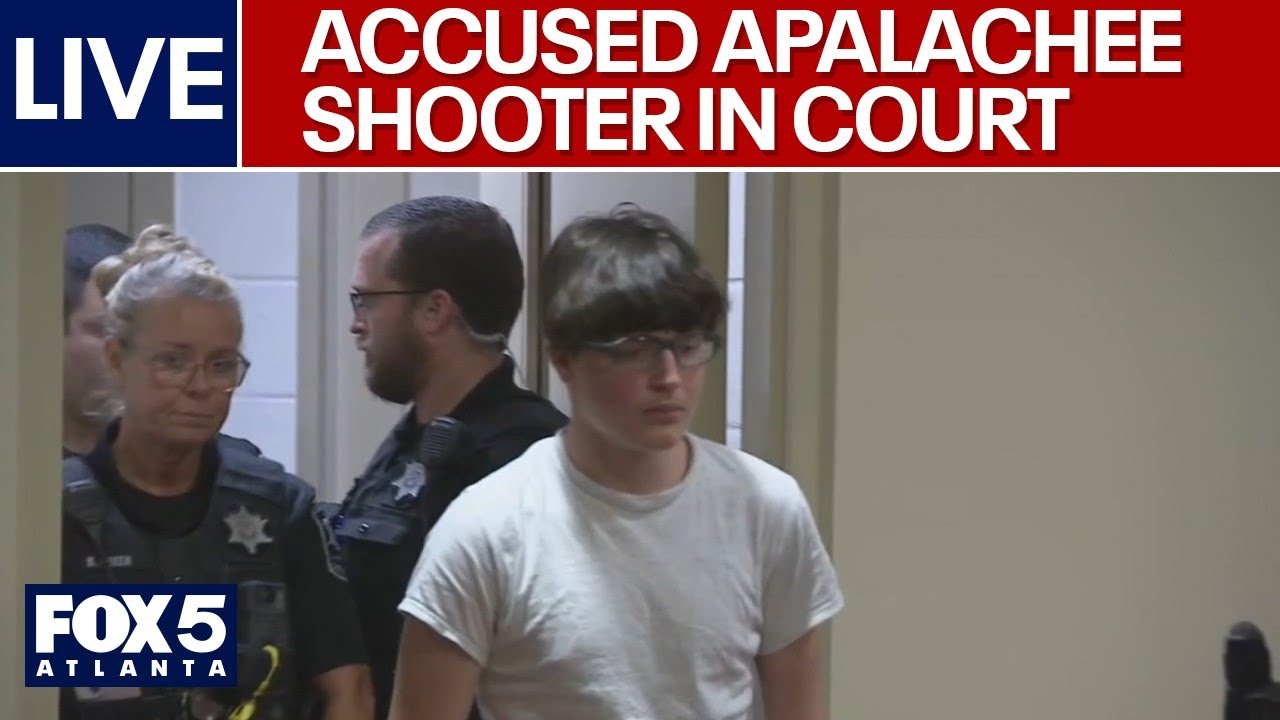
Case status: Colt Gray pleaded guilty on July 24, 2026 to all 55 counts and was sentenced on July 28, 2026 to life in prison without the possibility of parole. His father, Colin Gray, convicted by a jury on March 3, 2026, was sentenced on July 30, 2026 to 15 years in prison. Based on court filings and contemporaneous reporting. Photo: court pool feed frame of Colt Gray at a 2026 pretrial hearing (Fox 5 Atlanta broadcast).
Reported to our editorial standards: records first, charges reported as charges, corrections welcomed.
Frequently asked questions
Did Colt Gray plead guilty?+
Yes. On July 24, 2026, Colt Gray pleaded guilty in Barrow County Superior Court to all 55 counts against him — including malice murder, felony murder, aggravated assault, aggravated battery, and cruelty to children — with no deal from prosecutors. The plea ended the case without a trial.
What sentence did Colt Gray get?+
On July 28, 2026, after a multi-day sentencing hearing that included victim impact statements from survivors and the families of the four people killed, the judge sentenced Gray, now 16, to life in prison without the possibility of parole. Because he was 14 at the time of the shooting, the death penalty was never available.
What is a non-negotiated plea?+
A non-negotiated plea — sometimes called an open or blind plea — means the defendant pleads guilty without any agreement from prosecutors. There is no deal, no recommended sentence, and no dropped charges. The defendant admits guilt to everything and leaves the sentence entirely in the judge's hands. That is exactly what Gray did on July 24.
What happened to Colin Gray, Colt's father?+
He was sentenced to 15 years in prison on July 30, 2026 — two days after his son received life without parole. A jury convicted him on March 3, 2026 of second-degree murder, involuntary manslaughter, reckless conduct, and cruelty to children for giving his son access to the rifle despite escalating warning signs, making him the first parent in the country convicted of murder for a school shooting carried out by their child. Judge Nicholas Primm ran the counts concurrently, explaining that 'the warning lights were flashing brighter and brighter' and Colin Gray failed to act.
Who were the victims of the Apalachee High School shooting?+
Four people were killed on September 4, 2024: math teachers Cristina Irimie and Richard Aspinwall, and 14-year-old students Mason Schermerhorn and Christian Angulo. Nine others were injured.
Was Colt Gray's trial supposed to happen in October?+
Yes. In early July 2026, the judge set jury selection for October 13, 2026, with jurors to be drawn from Columbia County because of pretrial publicity in Barrow County. Days later, court documents indicated Gray would change his plea on July 24 instead — and once the guilty plea was entered and accepted, the October trial was off. There will never be a trial in this case.
Stay On The Case
Get the next case file first
One email when a new case drops — footage, records, and the full breakdown.
Subscribe on YouTubeRelated case files
 Trials & Verdicts
Non-Negotiated Guilty Pleas: Why a Defendant Pleads Guilty With No Deal
No plea bargain, no agreed sentence — just guilty, to everything. Why defendants enter open or 'blind' pleas, what happens at the hearing, and what it means for sentencing.
 Crime News
True Crime Court Dates Tracker: Every Big Case Hearing in 2026
When does the Lindsay Clancy trial start? Luigi Mangione's trial? Richard Allen's appeal? The Murdaugh retrial? Every major true crime court date ahead, tracked and updated.
Trials & VerdictsNo Body, No Murder? The Myth That Keeps Losing in Court
Can you be convicted of murder without a body? Yes — and the conviction rate is higher than you'd guess. How prosecutors prove a death with no remains.