Alex Murdaugh: The Kennel Video, the Verdict — and the Stunning Reversal
A dynasty lawyer, his murdered wife and son, a Snapchat video that destroyed his alibi — and in 2026, a Supreme Court ruling that erased the verdict. The full Murdaugh case file.
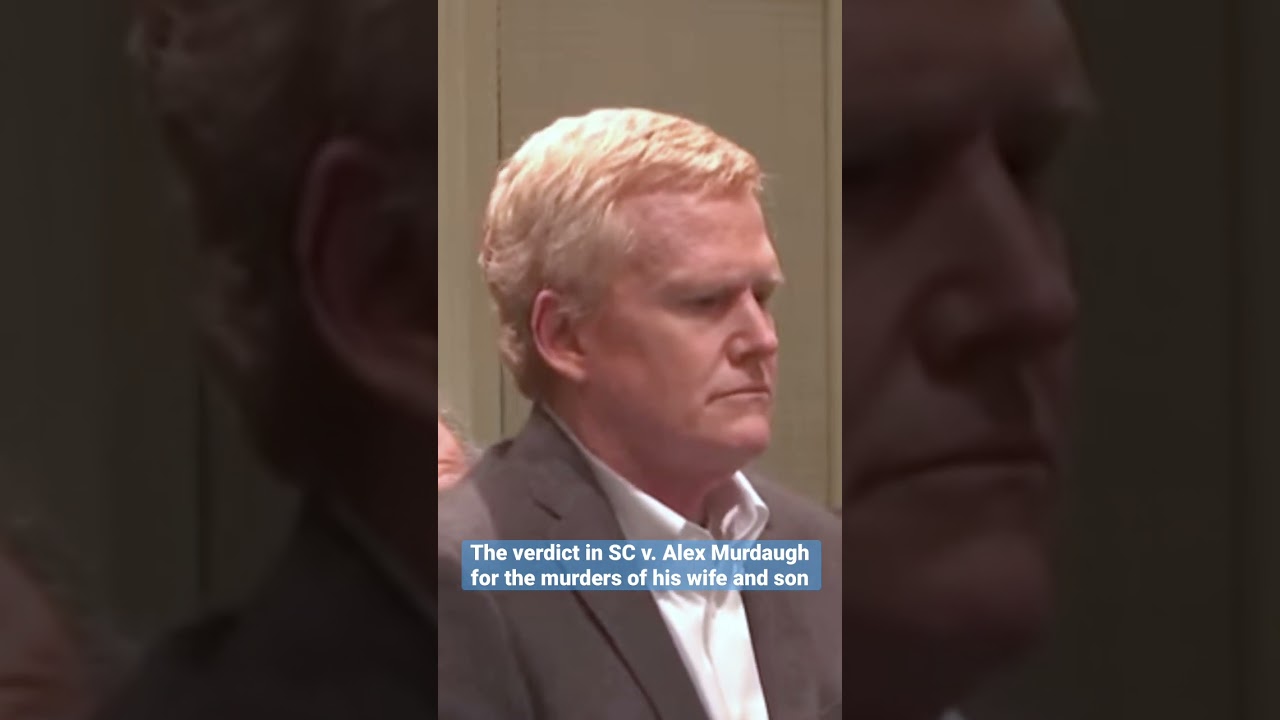
For a hundred years, the Murdaugh name was the law in South Carolina's Lowcountry — three generations of Murdaughs ran the local prosecutor's office, and the family's private firm made millions suing on behalf of the injured. Then, on the night of June 7, 2021, Richard "Alex" Murdaugh called 911 from his family's 1,700-acre hunting estate and said he'd come home to find his wife and son shot dead by the dog kennels.
What followed became the most-watched courtroom saga in a generation: a double murder, a collapsing empire of stolen money, a botched staged suicide, a six-week televised trial, a guilty verdict delivered in under three hours — and then, in May 2026, a unanimous state Supreme Court ruling that threw the whole verdict out.
This is a case file with two endings so far, and a third still to come.
The murders at Moselle
Margaret "Maggie" Murdaugh, 52, was shot four or five times with a rifle near the dog kennels. Paul Murdaugh, 22, was shot twice with a buckshot-loaded shotgun in the kennel feed room, the second shot catastrophic and point-blank. Two different guns, one scene — a detail that fueled early speculation about multiple shooters.
Alex told investigators he had been napping at the main house, then left around 9:00 p.m. to visit his ailing mother, returning at 10:00 to discover the bodies. He was, he said repeatedly — to 911, to deputies, to SLED agents — never at the kennels that night.
The context around the family was already dark. Paul was awaiting trial for a drunken 2019 boat crash that killed 19-year-old Mallory Beach, litigation that threatened to expose the family's finances. And those finances, it would turn out, were a bomb with a lit fuse.
The kennel video: an alibi destroyed by a dog
The single most devastating piece of evidence in the 2023 trial came off Paul's phone. At 8:44 p.m. — roughly five minutes before prosecutors said the killings began, based on when both victims' phones went permanently silent — Paul recorded a short video at the kennels of a friend's dog.
In the background, three voices. Paul's. Maggie's. And a third voice calling out about a chicken in a dog's mouth — a voice that witness after witness, friends and family and employees, identified under oath as Alex Murdaugh.
The man who told everyone he was never at the kennels was on tape at the kennels, minutes before his wife's and son's phones stopped forever. Confronted on the stand — in a gamble that put Murdaugh himself before the jury — he admitted the voice was his and that he had lied for twenty months, blaming paranoia induced by opioid addiction: "Oh, what a tangled web we weave." The prosecutor finished the quote for him.
The money: a motive measured in millions
Prosecutors argued the murders were a firebreak — a catastrophic act of misdirection by a man about to be exposed. The evidence of the collapse was overwhelming and largely uncontested:
- Murdaugh had stolen roughly $12 million from his own legal clients and law partners over a decade — settlement money diverted from paralyzed clients, from the families of the dead, even from the sons of his housekeeper, Gloria Satterfield, after her fatal fall at the family home.
- On the very morning of the murders, his law firm's CFO confronted him about $792,000 in missing fees. The boat-crash lawsuit was simultaneously forcing a court look into his finances.
- Three months after the murders, with the thefts unraveling, Murdaugh arranged for a man to shoot him on a roadside in a staged assisted-suicide-for-insurance scheme that failed when the bullet only grazed his head.
The financial crimes were never in dispute for long: Murdaugh eventually pleaded guilty to dozens of state counts (27 years) and federal charges (40 years), admitting the thefts in open court.
Verdict one: March 2023
The murder trial in Walterboro ran six weeks and was streamed globally. The state stacked the kennel video, the lie, the motive, gunshot-residue and cellphone-movement evidence, and the family's own guns (the murder weapons were never found, but shell casings at the scene matched casings from rifles associated with the property). The defense hammered the absence of direct evidence — no confession, no weapons, no blood-soaked clothing — and called the investigation tunnel-visioned.
The jury deliberated less than three hours. Guilty on all counts. The next morning, Judge Clifton Newman — in a moment that instantly entered courtroom lore — sentenced Murdaugh to two consecutive life terms, telling him the dead would visit him nightly.
It looked like the final chapter. It wasn't.
The clerk: Becky Hill
Within months, Murdaugh's lawyers filed an extraordinary allegation: Rebecca "Becky" Hill, the elected Colleton County Clerk of Court — the official who managed the jury, walked them to lunch, and stood feet from them for six weeks — had tampered with the verdict.
According to juror affidavits and testimony, Hill told jurors to "watch his actions" and "watch him closely" before Murdaugh testified, commented on his believability, and pressured the panel toward a quick verdict. Weeks after the trial, Hill published a tell-all book about the case — a book whose sales depended on a guilty verdict. One juror, "Juror Z," testified the clerk's comments "made it seem like he was already guilty."
A lower-court hearing in 2024 acknowledged Hill made improper comments but found no proof they changed any vote, and the conviction initially survived. Hill, meanwhile, resigned amid ethics investigations and was separately indicted on charges related to her conduct in office.
Murdaugh's team appealed — and in May 2026, the South Carolina Supreme Court ruled 5-0 that Hill "placed her fingers on the scales of justice, thereby denying Murdaugh his right to a fair trial by an impartial jury." The murder convictions were vacated. A new trial was ordered.
Where the case stands now
Be precise about what the reversal does and does not mean — because both sides of the internet get it wrong:
- It is not an acquittal. The court did not find Murdaugh innocent or the evidence weak; it found the process fatally contaminated. The kennel video, the lie, the motive evidence — all of it can be presented again.
- He is not going free. The financial-crime sentences — 40 years federal, 27 state — stand untouched. Murdaugh, now in his late 50s, remains in prison regardless of what happens next.
- The retrial has a date: April 5, 2027. At a June 29, 2026 hearing, Circuit Judge Debra McCaslin set jury selection for that day — "When I say April 5th, we're picking a jury and going forward." First, an August 14, 2026 pretrial hearing decides the defense's push for enhanced DNA testing of unknown male DNA recovered from under Maggie's fingernails (prosecutors oppose it), plus change-of-venue and discovery motions. Every date lives on the court dates tracker.
A second Murdaugh murder trial would be an American first in the streaming era: a complete, globally watched prosecution run back from zero, with every witness's prior testimony available for impeachment and a defense that has seen the state's entire hand.
The fingernail DNA: the retrial's one genuinely new front
Everything else in the retrial is a rematch. This is the new fight — and it's what the August 14 hearing is really about.
During the original investigation, SLED testing found DNA under Maggie Murdaugh's left fingernail that was not Alex Murdaugh's — it belonged to an unknown male. At the 2023 trial this barely registered. Now it's the centerpiece of the defense's pretrial strategy:
- The defense's ask. In filings through late July 2026, Murdaugh's lawyers asked the court to allow independent testing and analysis by a forensic genealogy lab — the investigative technique that identified the Golden State Killer — to try to put a name to the unknown man. Their theory writes itself: if someone else's DNA is under the victim's fingernails, the defense finally has the alternative suspect the first trial lacked.
- The state's answer. Prosecutors oppose the testing, arguing that trace "touch" DNA proves far less than it sounds like it proves — it can transfer through casual contact, shared objects, or the environment, and its presence under a fingernail does not indicate a struggle with an attacker. Their concern is a months-long science detour that jeopardizes the April 2027 date in exchange for evidence they say means nothing.
- The judge's tell. Judge McCaslin has asked the parties how long the testing would take — the question a judge asks when she's weighing granting it against her own trial calendar.
However August 14 goes, it shapes the retrial: testing granted means a possible new name in the case (or a null result that defuses the defense theory before trial); testing denied means the defense argues to the jury that the state was afraid of the answer. Either way, a piece of evidence that was a footnote in 2023 will be a headline in 2027.
The full timeline
- February 2019 — Paul Murdaugh's boat crash kills Mallory Beach; the lawsuit that follows starts prying open the family's finances.
- June 7, 2021 — Maggie and Paul are killed at the kennels at Moselle. Alex calls 911 at 10:07 p.m., saying he found them after visiting his mother.
- September 2021 — The roadside staged-shooting insurance scheme fails; the law firm forces Murdaugh out over missing money; the thefts begin unraveling publicly.
- July 2022 — Murdaugh is indicted for the murders.
- January–March 2023 — The six-week Walterboro trial: the kennel video, the twenty-month lie, the $12 million motive. Guilty in under three hours; two consecutive life terms.
- 2023–2024 — Murdaugh pleads guilty to the financial crimes (27 years state, 40 federal). The Becky Hill jury-tampering allegations surface; a 2024 hearing finds improper comments but lets the verdict stand.
- May 2026 — The South Carolina Supreme Court, 5-0: Hill "placed her fingers on the scales of justice." Murder convictions vacated.
- June 29, 2026 — Judge McCaslin sets the retrial: jury selection April 5, 2027.
- July 2026 — The DNA fight escalates: defense files for independent and genealogical testing of the fingernail DNA; the state opposes.
- August 14, 2026 — Pretrial hearing on DNA testing, venue, and discovery — the ruling most likely to move the calendar.
- April 5, 2027 — Retrial begins, unless the pretrial fights move it.
Why this case file matters
The Murdaugh saga was already the definitive case about power — a family that ran the local justice system for a century, and whether the evidence could outweigh the name. The 2026 reversal made it the definitive case about process: the verdict didn't fall because the evidence failed, but because a courthouse official with a book deal stood too close to the jury.
Both lessons are the same lesson. The system's output is only as good as the people running it — a claim the Murdaugh family itself embodied on both sides of the law, across a hundred years and two life sentences that no longer exist.
The kennel video hasn't changed. The voice on it hasn't changed. Whether twelve new jurors hear it the same way — that's the next chapter of this file.
Case status as of this writing: 2023 murder convictions vacated by the South Carolina Supreme Court in May 2026; retrial sought by the state and pending. Murdaugh remains incarcerated on separate financial-crime sentences (40 years federal, 27 years state) to which he pleaded guilty. Under the law he is presumed innocent of the murders pending retrial. This article is based on trial testimony and evidence as presented in court, the Supreme Court's opinion, official statements, and contemporaneous reporting. Photo: courtroom pool footage, Colleton County Courthouse.
Reported to our editorial standards: records first, charges reported as charges, corrections welcomed.
Frequently asked questions
What was Alex Murdaugh convicted of?+
In March 2023, a jury convicted Murdaugh of murdering his wife Maggie and son Paul at the family's Moselle hunting property in June 2021, and he was sentenced to two consecutive life terms. He also pleaded guilty to dozens of financial crimes, receiving a 27-year state sentence and 40 years federally.
Why were Alex Murdaugh's murder convictions overturned?+
In May 2026, the South Carolina Supreme Court ruled 5-0 that Colleton County Clerk of Court Becky Hill improperly influenced the jury — including telling jurors to 'watch him closely' before Murdaugh testified — denying him a fair trial. The court ordered a new trial.
Is Alex Murdaugh free now?+
No. The reversal covers only the murder convictions. He remains in prison serving a 40-year federal sentence and a 27-year state sentence for stealing millions from legal clients — sentences unaffected by the murder ruling.
What was the kennel video in the Murdaugh trial?+
A video on Paul Murdaugh's phone, recorded at the dog kennels at 8:44 p.m. on the night of the murders, captured three voices — Paul, Maggie, and a third that dozens of witnesses identified as Alex Murdaugh. He had told police he was never at the kennels that night, and prosecutors used the video to dismantle his alibi.
When will Alex Murdaugh be retried?+
The retrial is set for April 5, 2027. Circuit Judge Debra McCaslin set the date at a June 29, 2026 pretrial hearing, telling the parties that jury selection begins that day. A pretrial hearing on August 14, 2026 will take up the defense's request for enhanced DNA testing of unknown male DNA found under Maggie Murdaugh's fingernails, along with venue and discovery motions — the ruling most likely to affect the schedule.
What is the fingernail DNA evidence in the Murdaugh case?+
State lab (SLED) testing found DNA under Maggie Murdaugh's left fingernail that did not belong to Alex Murdaugh — it came from an unknown male. Ahead of the retrial, the defense wants the sample sent for independent testing and forensic genealogy analysis to try to identify that man. Prosecutors oppose it, arguing trace 'touch' DNA can transfer through casual contact, objects, or the environment and does not indicate a struggle with an attacker. Judge McCaslin has asked how long testing would take — a signal the August 14, 2026 hearing will decide whether it happens.
Will the Murdaugh retrial be moved out of Colleton County?+
That is one of the open pretrial fights. The defense argues the Becky Hill scandal and years of saturation coverage have poisoned the local jury pool and the trial should be moved. No venue ruling has been issued; the issue is on the pretrial calendar alongside the DNA and discovery motions.
Where is Alex Murdaugh now?+
In a South Carolina state prison. The vacated murder convictions did not release him — he is serving a 27-year state sentence and a 40-year federal sentence for stealing millions from clients, sentences untouched by the Supreme Court's ruling.
Stay On The Case
Get the next case file first
One email when a new case drops — footage, records, and the full breakdown.
Subscribe on YouTubeRelated case files
 Case FilesVERDICT: GUILTY
The Delphi Murders: 43 Seconds of Video That Took 7 Years to Match
Libby German filmed her own killer on the Monon High Bridge. The video, the 'down the hill' audio, the 2024 verdict, and the appeal now underway — the full Delphi case file.
 Trials & Verdicts
What Actually Happens at an Appeal Hearing (It's Not a Retrial)
No jury, no witnesses, no new evidence — just judges, lawyers, and hard questions. What a criminal appeal oral argument really is, and how to watch one intelligently.
 Crime News
True Crime Court Dates Tracker: Every Big Case Hearing in 2026
When does the Lindsay Clancy trial start? Luigi Mangione's trial? Richard Allen's appeal? The Murdaugh retrial? Every major true crime court date ahead, tracked and updated.